LRF
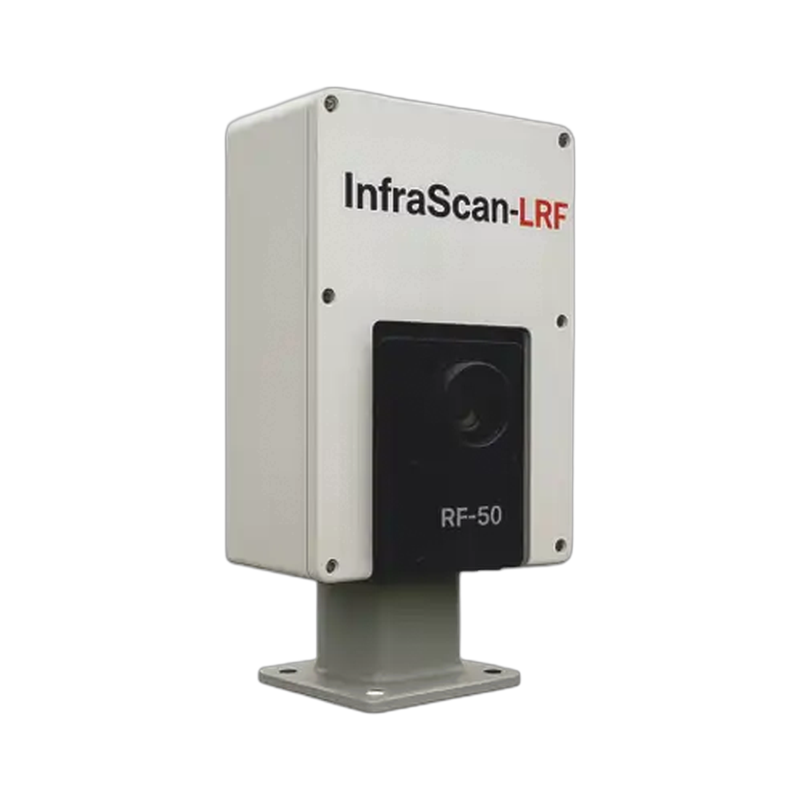
InfraScan-LRF
1. Overview
The InfraScan-LRF is a stationary monitoring system equipped with the LRF-50 long-range laser rangefinder. It is designed for real-time structural monitoring of bridges, dams, skyscrapers, and other critical infrastructure. By measuring precise distances to fixed control reflectors, the system detects millimeter-level displacements, helping to prevent accidents and ensure structural safety.
2. Key Features
- High Precision Monitoring: Detects structural displacements as small as ±1 mm
- Long-Range Operation: Effective measurement distance up to 7 km
- Continuous Real-Time Control: Monitors structural health 24/7
- IoT Integration: Automatic deviation logging and reporting to central monitoring platforms
- Early Warning System: Provides predictive alerts for possible failures or collapses
- All-Weather Capability: Operates reliably in rain, fog, and temperature extremes
3. Applications
- Bridge Monitoring – early detection of critical displacement in load-bearing elements
- Dam Safety – tracking structural shifts caused by water pressure or seismic activity
- Skyscraper Monitoring – monitoring sway and deformation due to wind or ground movement
- Industrial Facilities – ensuring safety of towers, chimneys, pipelines
- Critical Infrastructure – monitoring high-value structures against progressive collapse
| Laser Rangefinder (LRF-50) | |
| Laser Type | Eye-safe Class 1 IR laser (1535 nm) |
| Range | up to 7 km (with retroreflectors) |
| Accuracy | ±1 mm |
| Beam Divergence | <0.3 mrad |
| Measurement Frequency | up to 20 Hz |
| Output Data | Distance, deviation, timestamp |
| System Integration | |
| Data Interfaces | Ethernet, RS-485, Modbus TCP/IP, MQTT |
| IoT Connectivity | Cloud and on-premise platforms |
| Alarm Protocols | Configurable thresholds, automated notifications (SMS, Email, SCADA) |
| Mechanical & Environmental | |
| Housing | IP67, stainless steel or anodized aluminum |
| Operating Temperature | -40°C to +65°C |
| Humidity | up to 95% non-condensing |
| Mounting | Wall, bridge deck, or mast installation |
| Power | |
| Input Voltage | 24 VDC / PoE++ |
| Consumption | <50 W |
5. Functional Workflow
- Stationary Unit Setup – InfraScan-LRF with LRF-50 is mounted near the monitored structure
- Reflector Alignment – Retroreflectors placed on key points (bridge spans, dam walls, skyscraper joints)
- Continuous Monitoring – Laser rangefinder measures distances to reflectors in real time
- Deviation Detection – System logs even millimeter-scale displacements
- Data Transmission – Measurements sent to IoT/SCADA monitoring platform
- Alerting & Prevention – Automatic alarms if deviation exceeds safety thresholds
6. Benefits
- Structural Safety: Prevents catastrophic collapses by early detection
- High Precision: Detects the smallest shifts invisible to human eye
- Remote Control: Enables centralized monitoring across multiple structures
- Predictive Maintenance: Reduces operational risks and repair costs
- Long-Term Reliability: Designed for 10+ years of continuous operation
7. Typical Use Case
Bridge Scenario: InfraScan-LRF installed on the riverbank. Retroreflectors mounted on the bridge deck. System continuously measures span displacements caused by traffic and temperature changes. If deviation exceeds 5 mm threshold, automatic alerts are sent to operators, preventing possible failure.
8. Compliance & Standards
- IEC 60825-1 (Laser Safety)
- ISO 12494 (Structural Monitoring in Cold Climate)
- EN 1991-2 (Actions on Bridges – Monitoring Compliance)
- ISO 27001 (Cybersecurity for IoT integration)